Categories for Turks and Caicos
LOOP
Most visitors to Turks and Caicos arrive in Providenciales and remain there, moving between their villa, the beach, and a handful of restaurants they return to each evening. This is not a criticism — Grace Bay earns its devotion — but it does mean that a great deal of the archipelago goes largely unseen. For those who are curious, what lies beyond the main island is extraordinary.
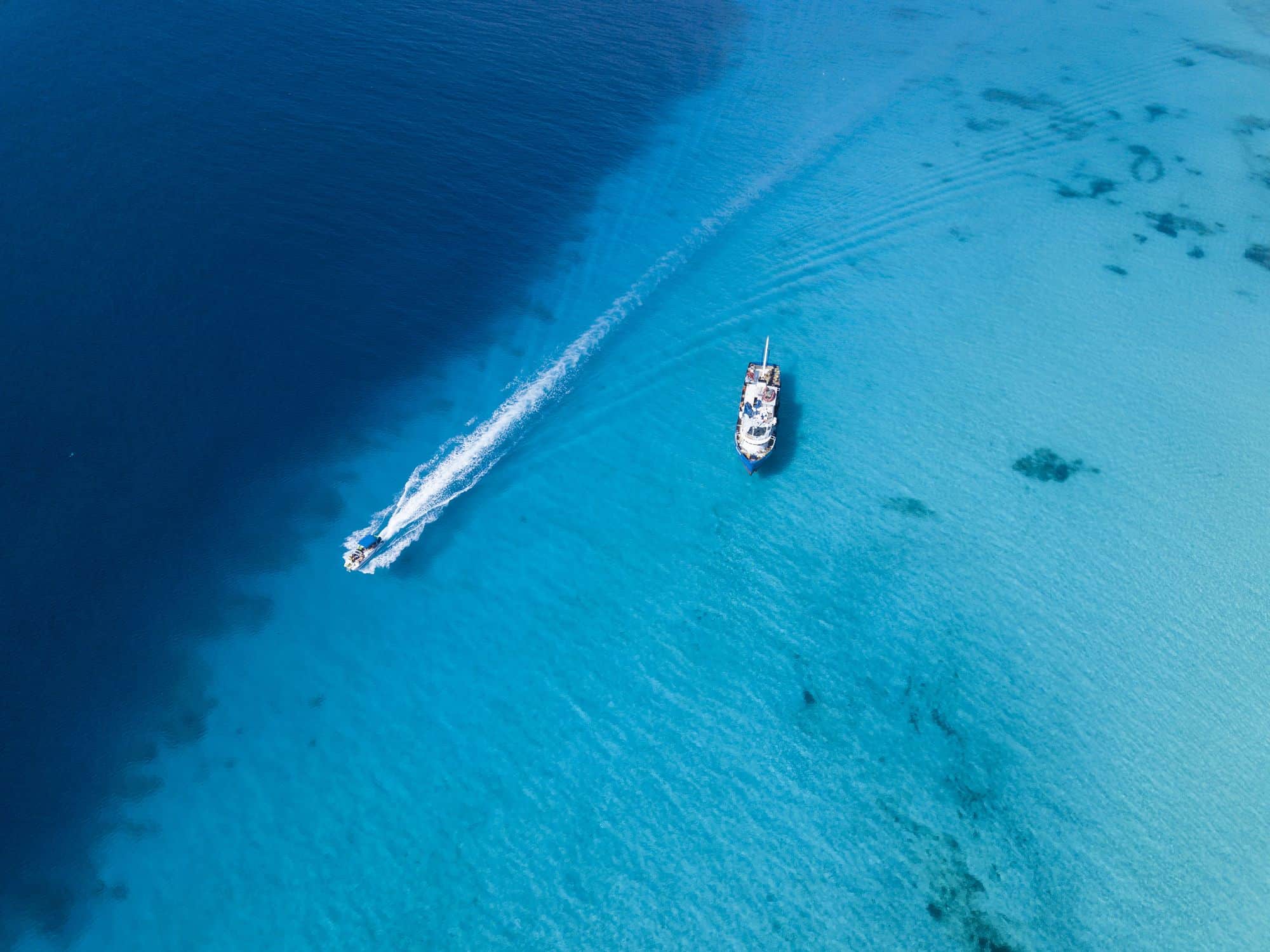
Turks and Caicos is not one island but forty, of which only eight are inhabited and fewer than that are easily accessible. The distances between them are not vast, and a boat or small charter aircraft changes everything. What follows is a partial map of what a more adventurous stay might include.

North Caicos: The Green Island
Most people do not realise that Turks and Caicos has an interior at all, let alone one that looks like this. North Caicos — reachable by a short ferry from Providenciales — is the most fertile island in the chain, its landscape shaped by freshwater ponds and dense vegetation that feels almost incongruous alongside the reef-and-sand imagery that defines the destination’s reputation. Flamingos wade in the ponds at Flamingo Pond, a sight so improbable that first-time visitors sometimes assume they have been staged. They have not.
The island’s plantation history is visible in the ruins at Wade’s Green, one of the best-preserved Loyalist estates in the British Caribbean. There are no crowds here, and the beaches — Whitby, in particular — are long, deserted and genuinely beautiful. North Caicos rewards the kind of traveller who finds unmarked places more interesting than celebrated ones.

Middle Caicos: Caves & Silence
Connected to North Caicos by a causeway, Middle Caicos is the largest island in the archipelago and the quietest. The Conch Bar Caves are its most remarkable feature — a limestone cave system of genuine scale, with stalactites, underground lakes, and the remains of Lucayan habitation dating back centuries. The caves are not difficult to access, but they feel genuinely remote, which is much of the point.
The coastline here is wild in a way that Grace Bay is not. Mudjin Harbour presents a drama of cliffs and offshore cays that looks nothing like the postcard version of TCI — and all the more compelling for it. This is the island for a day when the mood is exploratory rather than horizontal.

Salt Cay: the time-capsule island
South of Grand Turk, Salt Cay is perhaps the most atmospheric place in the entire archipelago. It was the centre of the islands’ salt industry for two centuries, and the evidence is everywhere: salinas that still hold their geometric shape, the ruins of the salt warehouses, the whale house that once processed the catches brought in during the humpback migration. The island has a population of fewer than a hundred people, a single road, and an atmosphere of absolute stillness.
Between January and April, humpback whales pass through the Turks Island Passage on their way to their breeding grounds — one of the more accessible whale-watching experiences in the Atlantic. From Salt Cay, the sightings are close.

Grand Turk: the capital with depth
Grand Turk is the seat of government and the historical heart of the islands, though its scale is entirely domestic — a handful of pastel-coloured streets, a museum that is better than its size suggests, and a waterfront where cruise ships anchor but do not, mercifully, dominate. The diving off Grand Turk is considered by many to rival that off Providenciales: a wall that drops to over two thousand metres begins just metres from the shore.
For a guest based at a villa like Milestone on Grace Bay or Beach Kandi in Turtle Cove, Grand Turk makes a natural day trip by charter — long enough to feel like proper exploration, short enough to be back for sundowners.
How to do it
The practical approach depends on appetite and time. A fast boat from Providenciales can reach North and Middle Caicos in an hour; Grand Turk and Salt Cay are better done by charter flight, which Providenciales handles easily. A villa stay of ten nights or more opens the possibility of threading two or three of these excursions together — an approach that transforms a beach holiday into something closer to a genuine exploration of one of the Caribbean’s least-understood archipelagos.
The best islands, as a rule, are the ones that require some effort to reach. Turks and Caicos, seen properly, is full of them.
April 1, 2026 5:46 pm
Published by Jill Engledow
Most visitors to Turks and Caicos arrive in Providenciales and remain there, moving between their villa, the beach, and a... View Article
LOOP
Simply Islands · Destination Guide · Turks and Caicos
Turks & Caicos has always punched above its weight in the dining department. For an archipelago whose reputation rests largely on the quality of its water, the restaurant scene on Providenciales is quietly exceptional — a mix of beachfront institutions, candlelit garden restaurants, and, increasingly, a new generation of chefs bringing genuine ambition to the islands. Here is where to eat well in 2026.

Coco Bistro
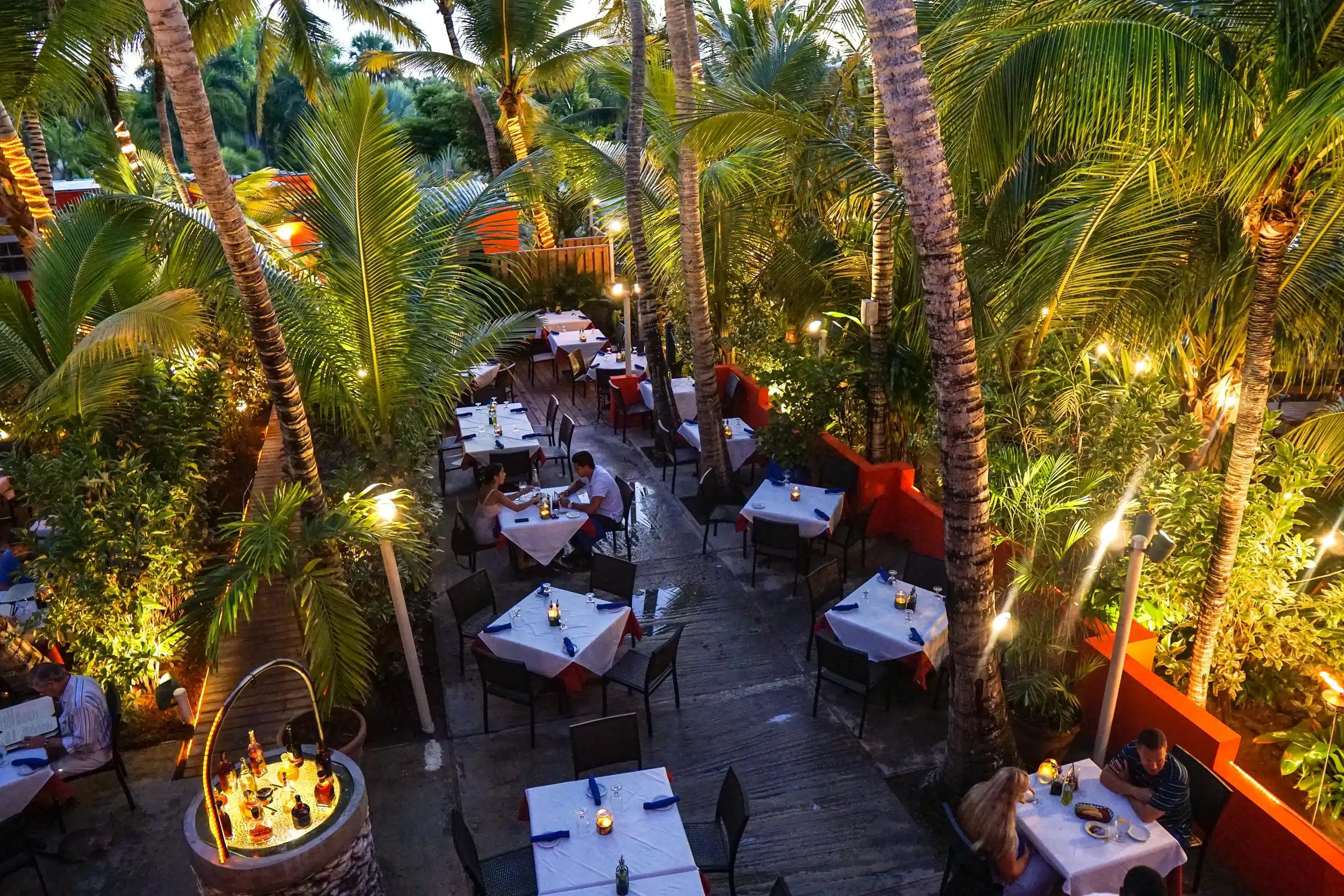
Few restaurants in the Caribbean have earned their reputation as solidly as Coco Bistro. Set within the largest palm grove on Providenciales, it offers the kind of dinner that justifies advance planning — candlelit tables beneath swaying palms, a menu that fuses Caribbean ingredients with continental technique, and a consistency that keeps both locals and returning visitors booking their table before they’ve even landed. Executive chef and owner Stuart Gary fuses local ingredients and flavours in a fashion that keeps diners returning season after season. The conch ravioli and jerk pork tenderloin with sweet potatoes are as good as anything on the island. Book at sunset.

Terra Mar
Terra Mar is a gourmet restaurant and chef’s table experience that prepares five-course tasting menus for a limited number of guests each night, with dishes by international chef Clayton Julien prepared in front of guests. The menu rotates every three months, pulling from Asian, Mediterranean, and Caribbean influences, and the result is one of the most genuinely distinctive dining experiences in the islands. It is the only dedicated gourmet chef’s table restaurant in Turks and Caicos, and diners who ate here in early 2026 called it a six-star experience. Reserve well in advance.

Infiniti at Grace Bay Club
Infiniti is the island’s premier gourmet restaurant, located at Grace Bay Club, where the Asian-fusion and Caribbean-inspired cuisine has earned a Wine Spectator Award of Excellence for four consecutive years. The setting alone earns its place on any list — the Caribbean’s longest infinity-edge bar at ninety feet, thatched roofing, and the kind of sunset views that make a cocktail feel ceremonial. The menu leans towards new Caribbean: tamarind-roasted salmon, grilled TCI spiny lobster, Dungeness crab toast.

Blue Water Bistro at Wymara
Perched at the water’s edge at Wymara Resort, Blue Water Bistro has established itself as one of the most consistently praised dining destinations on the island. Oceanfront tables, an impressive wine list, and a menu focused on pristine seafood and premium cuts make it a natural choice for a longer, unhurried dinner. Its sibling restaurant Indigo — also at Wymara — operates at a similarly high standard, making the resort something of a dining destination in its own right.

The Marine Room
The Marine Room has quickly become one of the top restaurants in Turks and Caicos, bringing together an ocean view, a chic atmosphere, and the incorporation of fresh local ingredients into its gourmet dishes. The menu is seafood-heavy and Mediterranean in character — squid ink pasta, grilled branzino, marinated swordfish — and the alfresco terrace is one of the more quietly elegant spots on the island. Tables book up quickly during the high season, so reservations are essential.

Da Conch Shack
No list is complete without it. Da Conch Shack is a casual, toes-in-the-sand beach shack that is world-famous for its freshly caught conch prepared in countless ways — a Provo institution that really shouldn’t be missed. Conch salad, conch fritters, conch chowder, curried conch — it is all here, served on a quiet beach away from the Grace Bay strip, with strong rum drinks and live music on Wednesday and Saturday evenings. Go at least once, ideally twice.
reservations are essential.

One to Watch: Embers
A fresh new addition to the Grace Bay dining scene, Embers has transformed the plaza across from Graceway Gourmet with a hip, intimate, modern dining experience serving creative shareable plates and handcrafted cocktails in an upbeat setting. At the centre of it all is a custom ten-foot parrilla grill, where everything is cooked over fragrant oak — the menu weaves together Asian influences, Mediterranean flair, and local TCI ingredients with genuine skill. Owner and executive chef James Van Dyke brings a culinary background spanning the United States, the Bahamas, and the Caribbean, and the early reception has been emphatic. With live music several nights a week and a proper mixologist behind the bar, it has quickly become the island’s most talked-about new table. Book it before everyone else does.
The dining scene in Turks and Caicos rewards those who plan. Most of the best restaurants — Terra Mar and Coco Bistro in particular — fill up weeks in advance during the November-to-April season. A villa stay with a private chef remains the most reliably excellent meal on the islands, but on the nights you venture out, the options above will not disappoint.
March 20, 2026 1:39 pm
Published by Jill Engledow
Simply Islands · Destination Guide · Turks and Caicos Turks & Caicos has always punched above its weight in the... View Article
LOOP
There is a particular kind of traveller who has seen most of what the Caribbean has to offer — who has done St. Barths in December, Mustique in the shoulder season, Anguilla quietly, and still finds themselves wondering whether the next chapter might look different. For many of them, that chapter is now beginning in Turks and Caicos.
The islands have been building towards this moment for some time. What was once known primarily as a beach destination — extraordinary in that respect, but perhaps not much more — has matured into something considerably richer: a place with genuine architectural ambition, a food and hospitality culture that no longer needs to apologise, and a natural environment of quite startling beauty. The question worth asking is why, and why now.

The Water, First and Always
Any honest account of Turks and Caicos begins here. Grace Bay has been ranked among the finest beaches in the world for so long that the accolade risks feeling routine — but the water itself never does. The colour is a product of the Caicos Bank, a vast shallow-water platform that filters and reflects light in a way that produces that particular luminous turquoise seen nowhere else quite so purely. Snorkelling off the shore of a villa such as Milestone on Grace Bay, you are above the third-largest coral reef system in the world, and it shows — the marine life is dense, healthy and largely unhurried by the presence of people.
Beyond the reef, the diving is world-class. The wall dives off Providenciales descend into extraordinary depths, and the visibility — routinely over thirty metres — makes them an experience that stays with you. For those who prefer their water from above, the kitesurfing off Long Bay is among the best in the Atlantic Basin.

An Architecture That Has Grown Into Itself
The villa landscape in TCI has changed substantially over the past decade. What exists now, particularly along Grace Bay and on the private estates at Blue Cay, represents some of the most considered residential architecture in the Caribbean — buildings that have absorbed their setting rather than imposed upon it. Cabuya at Blue Cay Estate is a good example of the direction travel has taken: a residence that takes the palette of its surroundings — bleached coral, deep ocean, low salt scrub — and works with it rather than against it.
This is not a coincidence. The planning environment in TCI rewards restraint, and the buyers and developers who have shaped the most interesting properties here tend to be people for whom privacy and proportion matter more than spectacle. The result is an island that feels curated rather than crowded.

A Social Life at the Right Volume
One of the things that distinguishes Turks and Caicos from some of its peers is the calibration of its social scene. It exists — there are restaurants worth travelling for, beach bars that earn their reputation, and a November-to-April season with enough texture to satisfy — but it never overwhelms. The islands do not have the intensity of St. Barths at New Year, nor the political complexity of some larger Caribbean destinations. What they have is a kind of confident ease: the sense that everything is available, and that none of it is compulsory.
The culinary scene has matured accordingly. Restaurants along Grace Bay have moved well past the safe international menus that once characterised resort dining across the region, and private chefs with genuine credentials are increasingly available for villa stays — allowing guests at a property like Beach Kandi in Turtle Cove to eat as well as they would anywhere.
The Practical Case

For European travellers, the logistics have never been more straightforward. Providenciales International Airport handles direct services from the United Kingdom, and the US connections — Miami, New York, Atlanta — are frequent and short. Once on the ground, the island is compact enough to navigate without difficulty, and remote enough to feel genuinely removed from ordinary life.
There is also the question of the Belonger culture — the name given to native Turks and Caicos Islanders — which shapes the character of the islands in ways that reward those who pay attention. The history here is layered and genuinely interesting: salt industries, Loyalist settlers, a Lucayan heritage that pre-dates European contact. TCI is not simply a backdrop for a holiday. It is a place with its own story.
That story is still being written. And at this particular moment, the chapter being added is a good one.
March 19, 2026 4:14 pm
Published by Jill Engledow
There is a particular kind of traveller who has seen most of what the Caribbean has to offer — who... View Article